
Home › Blog › Probiotics vs Digestive Enzymes
Comparison Guide| In one line | Digestive enzymes help you break food down during a meal; probiotics help maintain a balanced gut microbiome over time. They solve different problems. |
| Choose enzymes if | Your discomfort spikes right after heavy, rich or protein-packed meals — enzymes act in the short term, meal by meal. |
| Choose probiotics if | You want steadier, longer-term gut balance and less day-to-day gas and bloating — probiotics build up with consistent daily use. |
| Can you take both? | Yes. They work on different stages of digestion, which is why many daily formulas include both. |
If you have ever stood in the supplement aisle wondering about probiotics vs digestive enzymes, you are asking a genuinely useful question — because these two products are often sold side by side yet do completely different jobs. Buying the wrong one for your situation is a common, quiet waste of money. This guide explains what each does, how they differ, when to reach for one over the other, and why a lot of well-designed formulas simply include both.
Here is the distinction in plain terms: digestive enzymes help break your food down while you eat it, and probiotics help maintain a balanced community of bacteria in your gut over time. Enzymes are a short-term, meal-by-meal aid. Probiotics are a long-term, ecosystem-level support. Once that difference clicks, most of the confusion around these products disappears.
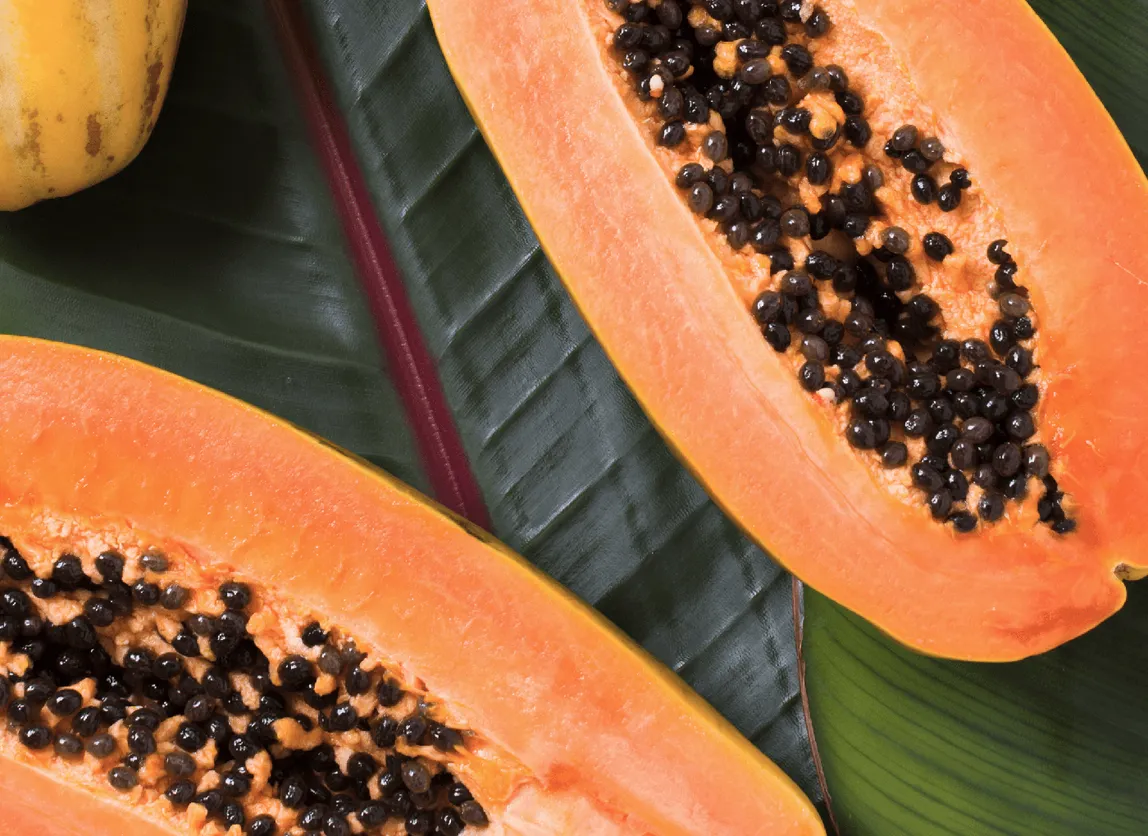
Enzymes are proteins that act like molecular scissors, cutting large food molecules into smaller pieces your body can absorb. Your pancreas and gut already produce them — proteases for protein, lipases for fat, amylases for carbohydrates. Supplemental enzymes aim to give that process extra help, particularly with heavy, rich or protein-dense meals. A traditional plant example is papain, the enzyme found in papaya seed and flesh, long used to help the body handle protein-heavy food. The clearest real-world case is lactase for lactose intolerance, where a missing enzyme is replaced for the meal that needs it — the National Institute of Diabetes and Digestive and Kidney Diseases sets out the background on lactose intolerance, and a systematic review has also examined whether probiotics help the same problem by a different route (Oak and Jha, Critical Reviews in Food Science and Nutrition, 2019).
The key practical point about enzymes is timing. Because they work on the meal in front of you, they are taken with or just before eating, and their benefit is specific to that meal. They are not something you build up over weeks; they are a tool you deploy when you know a big or unfamiliar meal is coming.
Probiotics are live, beneficial microorganisms — strains such as Lactobacillus paracasei, Lactobacillus reuteri and Bifidobacterium lactis. Rather than breaking down a single meal, they join and support the vast microbial community already living in your large intestine. That community influences how much gas you produce, how regular you are, and how comfortable your gut feels day to day. The consensus definition is worth holding onto, because it makes the strain the unit of evidence rather than the category (Hill et al., Nature Reviews Gastroenterology & Hepatology, 2014).
The crucial difference from enzymes is that probiotics work cumulatively. You do not feel a probiotic “kick in” after one capsule the way you might notice enzymes after a heavy dinner. Instead, taken consistently, they support a gradual shift toward a more balanced microbiome. This is why probiotics are dosed daily and judged over 4 to 8 weeks, not overnight.

It helps to see the contrast laid out directly:
Reach for a digestive enzyme when your discomfort is clearly tied to eating — that stuffed, sluggish feeling an hour after a large steak dinner, a rich restaurant meal, or an unfamiliar cuisine on holiday. If you notice a pattern where specific heavy meals reliably leave you uncomfortable, an enzyme taken with those meals is a logical, targeted tool.
Reach for a probiotic when your concern is more general and ongoing: everyday gas, irregularity, a gut that feels “off” without one obvious trigger, or a microbiome you want to support after a course of antibiotics or a stretch of poor eating. Probiotics are a maintenance habit, not an emergency fix, and they reward consistency. If your main issue is bloating specifically, it is worth reading our practical guide to reducing bloating after eating alongside any supplement.
Because enzymes and probiotics act on different stages of digestion, they are not competitors — they are complementary. Enzymes help less undigested food reach the colon, while probiotics support the bacteria that live there. Tackling comfort from both ends at once is often more effective than betting everything on one lever. This is exactly why many modern daily formulas combine an enzyme source with a multi-strain probiotic in a single capsule. The medical version of enzyme therapy makes the separation obvious: pancreatic enzyme replacement is dosed with meals to address a diagnosed deficiency, and it is not a microbiome intervention at all (Whitcomb et al., Gastroenterology, 2023). For the acid-neutralising alternative that is often confused with enzymes, see digestive enzymes vs antacids.
Getting the timing right matters more than most people realise. Enzymes are taken with or just before the meal you want help digesting, because they need to be present while the food is in your stomach and small intestine. Probiotics are far less fussy about timing but very fussy about consistency — the benefit comes from taking them every single day, not from taking them perfectly. Many people find it easiest to attach a daily probiotic to an existing habit, such as breakfast, so it becomes automatic and never gets skipped. If a single capsule contains both, taking it with your first meal conveniently covers both bases at once.
One ingredient often confused with probiotics is prebiotics — the fibres that feed the beneficial bacteria you already have. Prebiotics are neither enzymes nor live cultures; they are food for your microbiome. They pair naturally with probiotics, which is why you will sometimes see the two combined and labelled a “synbiotic.” If you decide to increase prebiotic fibre, do it gradually, because a sudden jump can temporarily increase gas while your gut adjusts — the same principle we cover in our guide to reducing bloating after eating. Understanding this trio — enzymes for the meal, probiotics for the microbiome, prebiotics to feed it — is the clearest way to make sense of the whole digestive-supplement aisle.
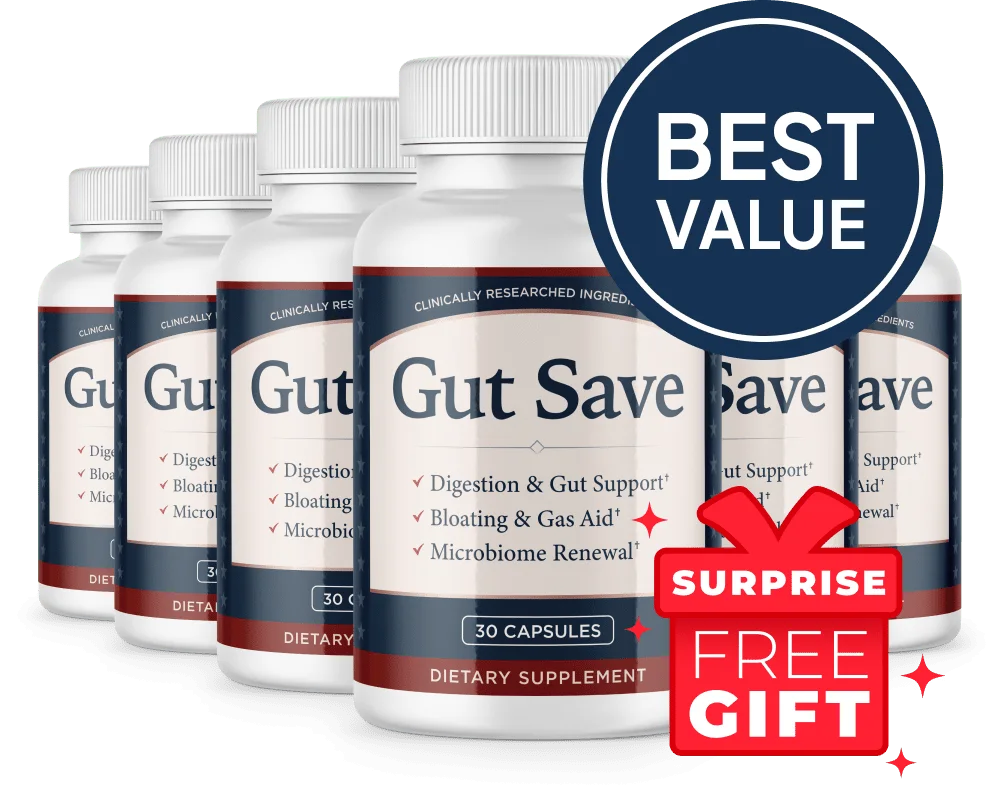
GutSave pairs papaya-seed enzymes for heavy meals with a 1.25-billion-CFU, multi-strain probiotic blend for everyday microbiome balance — so you are not forced to choose. One capsule a day, 60-day money-back guarantee.
See GutSave PackagesWhichever route you take, the label tells you whether a product is worth buying. For enzymes, look for named enzymes or recognisable plant sources rather than a vague “enzyme blend.” For probiotics, insist on a stated CFU count and the specific strains, not just the genus. And for any combined formula, make sure the doses are disclosed rather than hidden in a proprietary blend. Our full buyer’s checklist for choosing a digestive supplement walks through every line to check, and our overview of whether digestive supplements are worth it helps set realistic expectations before you buy.
Neither enzymes nor probiotics are cures, and neither is a substitute for the basics — eating slowly, sensible portions, enough fibre and water, and moving after meals. They are supportive tools that work best on top of good habits. If you are pregnant or breastfeeding, immunocompromised, taking medication, or managing a diagnosed digestive condition, check with a healthcare professional before starting either, and seek medical advice for symptoms that are severe, persistent or worsening. Used sensibly, though, understanding the difference between these two products is the first step to spending your money on the one that actually fits your gut. You can always start with the once-daily approach and see how a combined formula fits your routine.
Digestive enzymes are proteins that chemically break food into smaller pieces your body can absorb, acting during the meal. Probiotics are live beneficial bacteria that help maintain a balanced gut microbiome over time. One is a short-term digestive aid; the other is a long-term ecosystem support.
Yes. Because they act on different parts of digestion, they are commonly combined. Enzymes work on the food you are eating now, while probiotics support the microbiome over weeks. Taking both can address discomfort from more than one angle.
Enzymes act during the meal they are taken with, so any benefit is meal-specific rather than gradual. That is why they are typically taken with or just before eating, especially before a large or rich meal.
Probiotics work cumulatively. Many people give them at least 4 to 8 weeks of consistent daily use before judging, because they support a gradual shift in the balance of the gut microbiome rather than an instant effect.
It depends on the cause. If bloating flares right after heavy meals, enzymes may help in the moment. If it is a more general, ongoing issue, a daily probiotic that supports a balanced microbiome may help over time. Many people benefit from both.
† These statements have not been evaluated by the Food and Drug Administration. This product is not intended to diagnose, treat, cure or prevent any disease. This article is for general information only and is not medical advice — see a doctor about blood in the stool, unexplained weight loss, persistent or severe pain, or a sudden lasting change in bowel habit. Affiliate disclosure: GutSave.com is an independent guide and not the manufacturer or seller. Some links on this page are affiliate links, and we may earn a commission — at no extra cost to you — if you buy through them. This never changes the price you pay or what we write.