
Home › Blog › Irish Sea Moss vs Psyllium Husk for Digestion
Comparison Guide| In one line | Both are soluble, gel-forming fibres, but psyllium husk is the concentrated go-to for regularity, while Irish sea moss is a mineral-rich seaweed valued for its soothing gel. |
| Choose psyllium if | Your main goal is supporting regularity with a well-studied, concentrated soluble fibre — taken with plenty of water. |
| Choose sea moss if | You want a gentle, mineral-rich fibre with a soothing, gel-forming quality as part of broader gut support. |
| The catch | Both form a gel, so increase either slowly and drink water — ramping fibre too fast causes temporary gas. |
Fibre is having a moment, and two names come up again and again: the trendy seaweed and the old reliable. If you have been weighing Irish sea moss vs psyllium husk for digestion, you are really comparing two soluble, gel-forming fibres that overlap in some ways and differ sharply in others. One is a mineral-rich sea vegetable riding a wellness wave; the other is a concentrated, well-studied fibre that has quietly supported regularity for decades. This guide breaks down how they differ, what each is genuinely good for, whether you can use both, and how to choose without falling for hype.
In plain terms: Irish sea moss is a mineral-rich red seaweed prized for its soothing, gel-forming fibre, while psyllium husk is a concentrated soluble fibre from Plantago ovata seeds, widely used to support regularity. Both swell into a gel with water, which is why they feel similar on paper — but their source, mineral content, concentration and typical use pull them in different directions.
Irish sea moss (a form of red seaweed, often sold as Chondrus crispus or related species) is a sea vegetable that has been used traditionally around coastal communities for generations. Its standout feature is a gel-forming fibre — the same gelling quality that has long made seaweed extracts useful as natural thickeners. In the gut, that gentle gel is valued for a soothing, coating quality, and because sea moss is a seaweed it also naturally contributes minerals, including iodine.
Sea moss is best understood as a gentle, mineral-rich, gel-forming fibre rather than a high-dose regularity fix. It tends to be used at smaller amounts as part of broader gut support, which is exactly how it appears in a formula — alongside other gut-supporting ingredients rather than as a standalone fibre megadose. It is one of the botanicals we cover in our overview of how to choose a digestive supplement. The mineral content cuts both ways. Edible seaweeds concentrate elements from seawater, and analyses of retail seaweed have reported wide variation in metal content between species and harvest sites (Rubio et al., Chemosphere, 2017) — a reason to buy from a supplier that tests, and not to treat sea moss as something to take by the spoonful.
Psyllium husk comes from the seeds of Plantago ovata and is one of the most studied soluble fibres available. It is highly concentrated: a spoonful absorbs a striking amount of water to form a bulky, soft gel. That bulking action is why psyllium is the classic choice for supporting regularity — it adds soft bulk and helps things move comfortably. It is also the reason psyllium must be taken with a full glass of water; without enough liquid it is unpleasant to swallow and cannot do its job. It is also the fibre with the strongest trial record: a meta-analysis of randomised controlled trials found that fibre supplementation, psyllium included, improved stool frequency and consistency in adults with chronic constipation (van der Schoot et al., The American Journal of Clinical Nutrition, 2022).
Where sea moss is a gentle, mineral-carrying fibre, psyllium is a workhorse soluble fibre used deliberately at meaningful amounts. It brings little in the way of minerals; its value is the fibre itself and the predictable bulking effect that comes with it.
Here is the contrast laid out directly:
“Better” depends entirely on your goal. If your priority is supporting regularity with a concentrated, well-researched fibre, psyllium husk is the more targeted, evidence-backed pick — provided you take it with plenty of water and build up slowly. If your interest is a gentle, mineral-rich fibre with a soothing gel quality as part of overall gut support, Irish sea moss fits that role, especially inside a broader formula rather than as a solo high-dose fibre — you can see how GutSave includes organic Irish sea moss alongside its other gut-support ingredients. Neither is a magic bullet, and both work best on top of a genuinely fibre-rich diet.

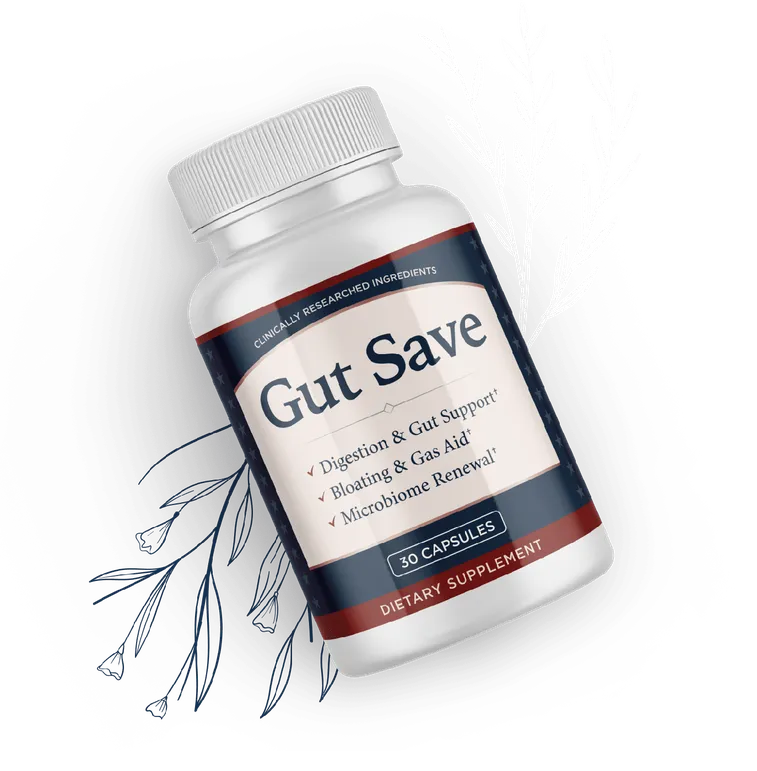
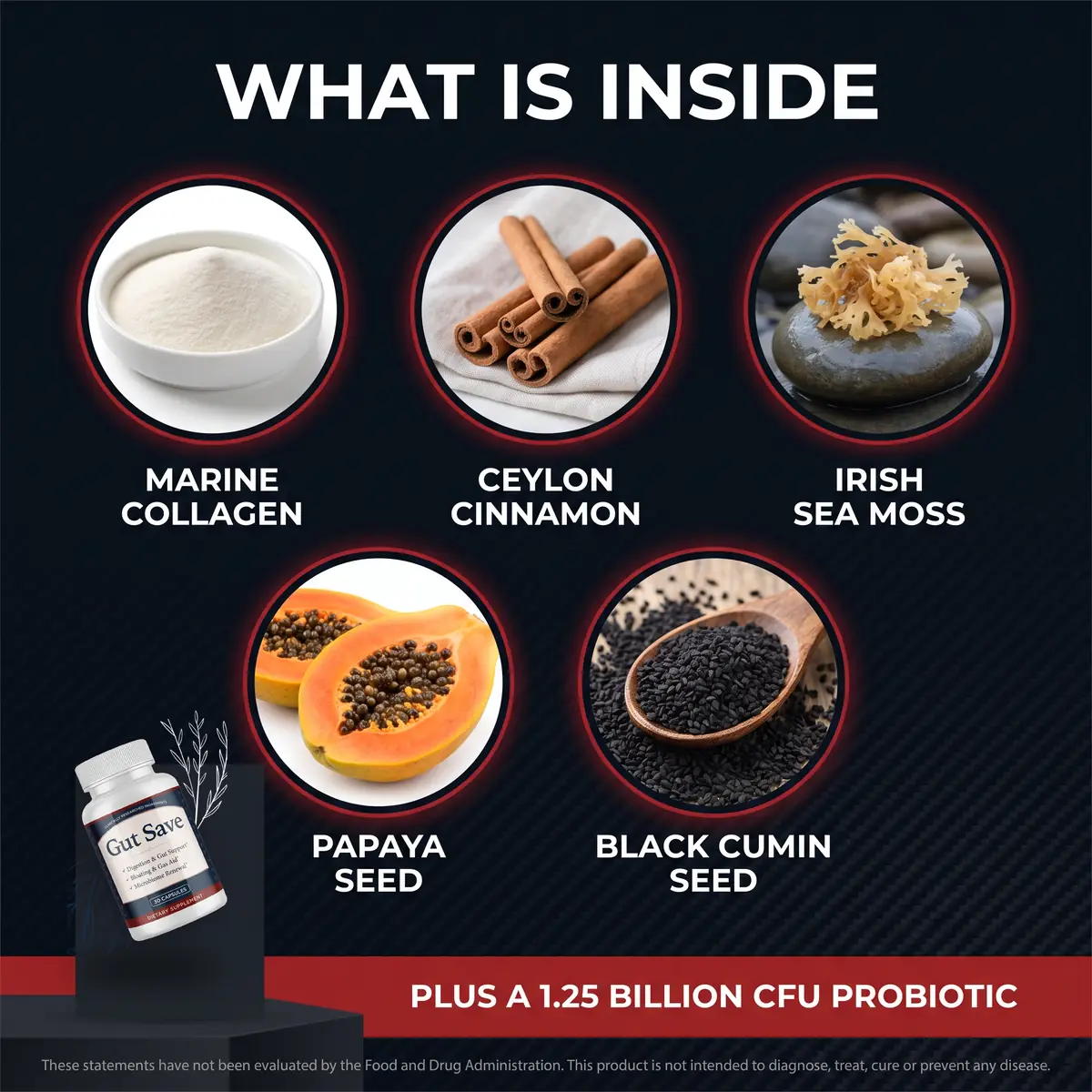
GutSave includes organic Irish sea moss for its soothing, gel-forming fibre, alongside marine collagen, Ceylon cinnamon, papaya-seed enzymes and a 1.25-billion-CFU probiotic blend — one capsule a day, backed by a 60-day money-back guarantee.
See GutSave PackagesYes — they are complementary, and some people use a concentrated psyllium fibre for regularity while getting sea moss (and its minerals) from a broader gut formula or their diet. The one rule if you combine them is to increase total fibre gradually and drink plenty of water. Stacking two gel-forming fibres at once and ramping up quickly is a reliable recipe for temporary gas and bloating while your gut adjusts — the same slow-ramp principle we explain in our guide to reducing bloating after eating. Go slow, hydrate, and let your system adapt.
Both of these are soluble fibres — the kind that gels and ferments. A complete fibre intake also includes insoluble fibre from whole grains, vegetables and skins, which adds the roughage that soluble fibres do not. Thinking in terms of “sea moss vs psyllium” alone can distract from the bigger point: most people simply do not eat enough fibre of any kind, and food is the foundation. A supplement — whether psyllium, sea moss or a blended gut formula — is a top-up, not a replacement for vegetables, legumes and whole grains. If you are also weighing other gut-support ingredients, our comparison of marine collagen vs bovine collagen for gut health and our look at Ceylon vs Cassia cinnamon for digestion round out the picture. Iodine is the other reason to keep seaweed servings modest: a clinical study of habitual seaweed consumption measured meaningful shifts in iodine status and thyroid markers (Aakre et al., European Journal of Nutrition, 2026), which is why the NIH Office of Dietary Supplements iodine fact sheet is worth a look before you scale up a seaweed habit.
This article is general information, not medical advice, and neither sea moss nor psyllium is a cure. A few safety points are worth remembering: always take gel-forming fibres like psyllium with plenty of water; increase any fibre gradually; and be aware that sea moss, as a seaweed, naturally contains iodine, which is worth noting if you have a thyroid condition or are watching your iodine intake. Fibre supplements can also affect how some medications are absorbed, so separate them in time and check if you take regular medication. If you are pregnant or breastfeeding, immunocompromised, taking medication, or managing a diagnosed digestive condition, speak with a healthcare professional before starting either, and seek medical advice for symptoms that are severe, persistent or worsening. Used sensibly on top of a fibre-rich diet, both can play a useful role — and you can see how GutSave builds gentle sea-moss fibre into a once-daily routine.
Both are soluble, gel-forming fibres, but they come from different sources. Irish sea moss is a red seaweed rich in minerals, prized for its soothing gel. Psyllium husk comes from Plantago ovata seeds and is a concentrated soluble fibre widely used to support regularity.
Psyllium husk is the more studied and concentrated option for supporting regularity, because it adds soluble fibre that forms a soft gel and adds bulk. Sea moss also forms a gel but is typically used at smaller amounts and valued more for its soothing, mineral-rich profile.
Many people do, since they are complementary fibres. If you combine them, increase the total fibre slowly and drink plenty of water, because adding two gel-forming fibres at once can cause temporary gas or bloating if you ramp up too fast.
Sea moss is a seaweed naturally rich in minerals such as iodine, and it is traditionally valued for its soothing, gel-forming quality. It contributes minerals and gentle fibre, whereas psyllium is used mainly as a concentrated soluble-fibre source.
Yes. Psyllium absorbs water to form its gel, so it must be taken with a full glass of water. Taking it with too little liquid can make it hard to swallow comfortably and defeats the purpose of the fibre.
† These statements have not been evaluated by the Food and Drug Administration. This product is not intended to diagnose, treat, cure or prevent any disease. This article is for general information only and is not medical advice — see a doctor about blood in the stool, unexplained weight loss, persistent or severe pain, or a sudden lasting change in bowel habit. Affiliate disclosure: GutSave.com is an independent guide and not the manufacturer or seller. Some links on this page are affiliate links, and we may earn a commission — at no extra cost to you — if you buy through them. This never changes the price you pay or what we write.